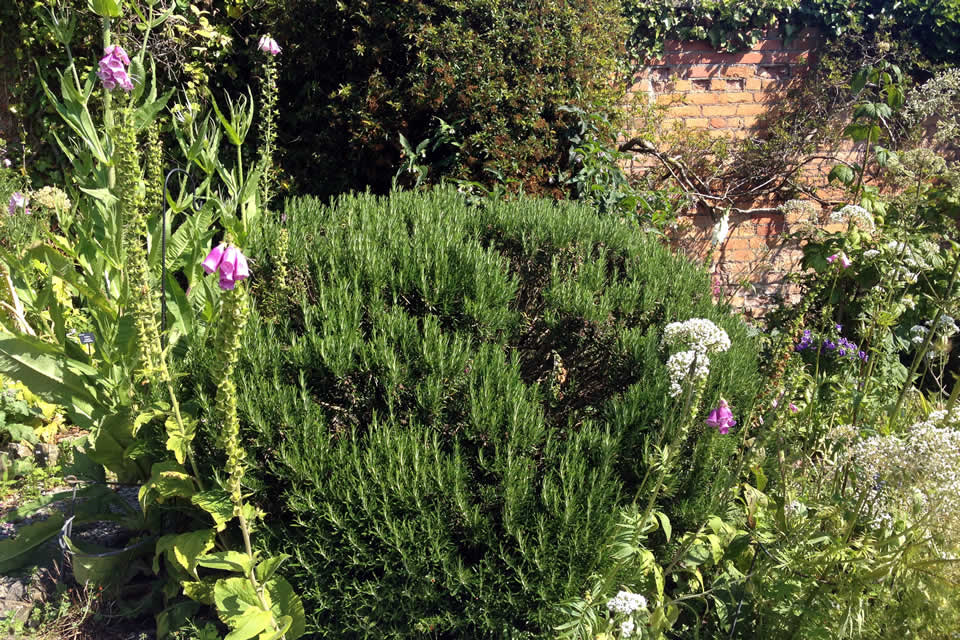
Rosemary and Yew
There’s rosemary, that’s for remembrance. Pray you, love, remember!
Hamlet (Act 4, Scene 5), William Shakespeare

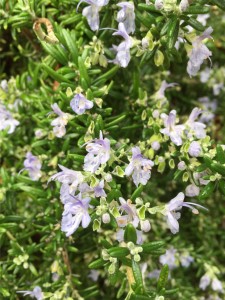
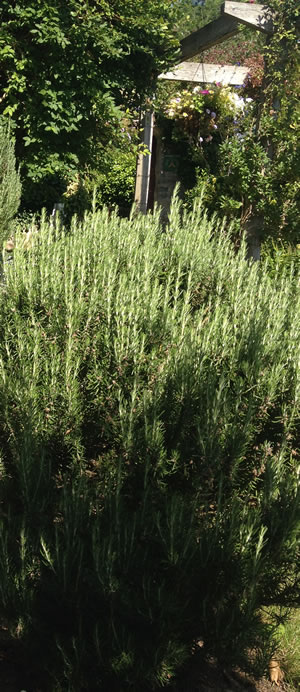
Rosemary at Chalice Well Garden
Rosemary (Rosmarinus officinalis) has been used to enhance memory since ancient Greek times, when students wore garlands of the herb to improve recall. Because of this property, rosemary earned the nickname “herb of crowns.”
Its name derives from the Latin rosmaris, meaning “dew of the sea,” and the plant is native to the dry, rocky regions along the Mediterranean coast.
Due to its link with memory, rosemary has traditionally been associated with both weddings and death. In the Middle Ages a bride would wear a rosemary headdress, while the groom and guests carried a sprig of the herb. This association turned rosemary into a love charm: the bride’s wreath symbolised fidelity, love, enduring friendship, loyalty, and remembrance of the life she had led before marriage. Couples often planted a rosemary branch on their wedding day.
A parallel custom, dating back to Roman times, involved laying rosemary branches on coffins at funerals. A sprig was also frequently placed in the hands of the deceased as a symbol of remembrance.

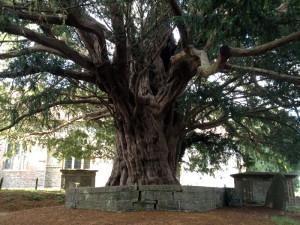
The yew tree has been associated with reincarnation and eternal life since time immemorial, likely because it appears to be immortal—able to live for well over a thousand years, with many specimens surviving much longer; some are thought to pre‑date Christ. The Fortingall Yew in Perthshire, for example, is said to be over 5,000 years old (a sapling from that tree now grows in the grounds of the Abbey Retreat House in Glastonbury).

The Fortingall Yew
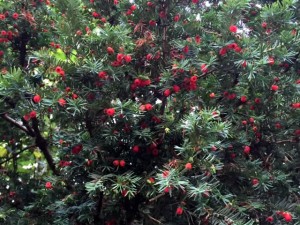
Yew (Taxus baccata) grows in a distinctive way: shoots or branches readily root and develop into new trunks, which then fuse with the main trunk. This growth habit gives the tree its massive, fluted girth. Once the primary trunk is established—a process that takes roughly 150 years—the yew continues to spread horizontally. In very old specimens the trunk often becomes completely hollow, reinforcing its reputation for “immortality.” It is therefore unsurprising that the yew has become a symbol of life after death.
Some people use yew to enhance magical or psychic abilities and to induce visions, believing it to be a potent conduit for dreams, ancestral connection, and otherworldly journeys. Do not try this at home! Every part of the tree is poisonous except for the fleshy aril that surrounds the seed.
In recent years, scientific research has identified taxol, a compound found in the yew’s bark, as an inhibitor of cell growth and division. This discovery offers promising possibilities for cancer treatment.
Historically, yew wood has been valued throughout Europe for making bows, and in Ireland it was also used for dagger handles and wine barrels. The tree’s association with graveyards is still debated. One theory is that medieval graveyards were often fenced, allowing the poisonous yew to be cultivated safely for its timber without endangering livestock. Another suggestion is that early Christian missionaries deliberately erected churches near existing yew trees because of the ancient, pagan reverence for the species; druidic rites likewise regarded groves and avenues of yew as sacred. Many of the oldest church‑yard yews clearly pre‑date the churches that now surround them.
While it is clear that the sacred yew pre-dates Christianity, the trees in churchyards were thought to protect the spirits of the dead, while the ancient custom of putting sprigs of yew into the shrouds and graves of the departed indicated a belief that death was not, in fact, the end of life, but merely a passing through into the continuance of life to come.